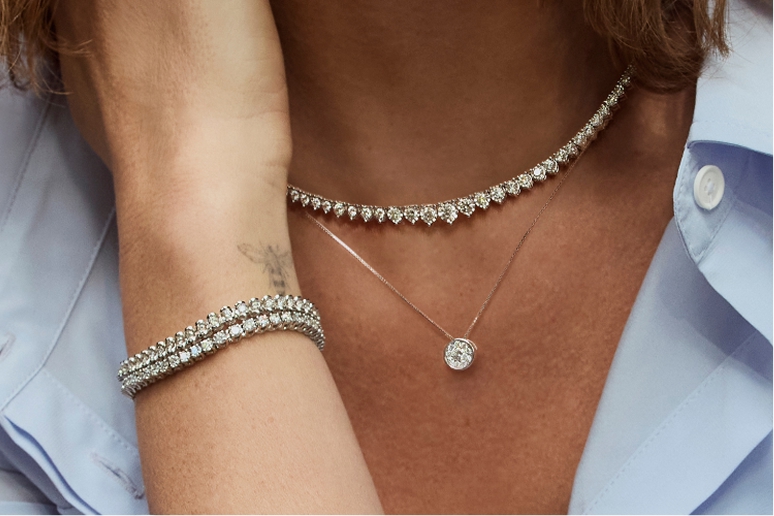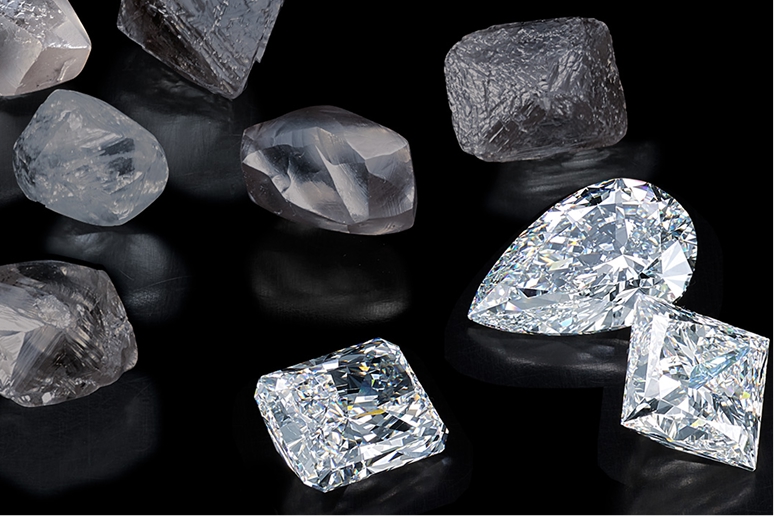












The better the cut, the brighter the sparkle. An excellent cut brings out a diamond’s best features.

LIMITED TIME ONLY
for more information on this promotion, see our current promo details page. See Details
LIMITED TIME ONLY
for more information on this promotion, see our current promo details page. See Detailsdiamond guide
The 4C’s of diamonds
The diamond 4C’s are cut, color, clarity and carat. Each C is a way to measure quality, and together they help determine the value of every natural and lab grown diamond. Understanding them will help you choose the diamond of your dreams.


Diamond cut
Your diamond’s cut has the biggest effect on how it sparkles. The most skilled cutters bring out the beauty and flashes of light hiding inside a rough diamond with a combination of experience, expertise and artistry. Cut grading tells us about the quality of a diamond’s surface, symmetry and proportions.
Don’t confuse cut and shape. The cut is about the quality of the shape; the shape is the form of the diamond.


Diamond color
Completely colorless diamonds — the ones as clear as a drop of water — are exceptionally rare. Color comes from the way diamonds are created, whether that takes place over eons in nature or through a controlled process in a lab. Whether you choose a natural or lab grown diamond, Helzberg’s experts can help you find one in the color range you’re looking for.

To the naked eye, a colorless diamond looks like a drop of pure water — it will have little to no tint of a yellow or brown hue. Because they’re so rare, diamonds in the colorless category are the most valuable.
A near-colorless diamond will have a very slight tint of yellow or brown that’s difficult to see without magnification or controlled lighting. They offer rarity for a good value.
You might detect a faint yellow or brown tint if you look at an unmounted, K-graded diamond. But once it’s mounted in a setting, the faint color is often difficult to detect with an untrained eye unless it’s right next to a near-colorless or colorless stone. That makes one of these diamonds a great value.

Diamond clarity
Whether diamonds are formed naturally over eons or grown in a lab, the intense conditions will cause most to have external blemishes or internal imperfections, called inclusions, that affect their clarity grade. Grading the precise number, size, location and visibility of the flaws tells buyers and consumers what they need to know about a diamond’s quality and value.
You can think of clarity as the quality of the stone and cut as the quality of the craftsmanship.

Internally Flawless (IF)
These are flawless diamonds, no matter how closely you look. Flawless and Internally Flawless stones are the rarest and get the highest quality diamond clarity grades.
Very, very slight internal flaws are only visible under a microscope and challenging for even a trained gemologist to see.
These very slight imperfections are somewhat difficult to see even when magnified and hard to see with the naked eye.
Someone with training can spot these slight inclusions with 10x magnification. They might even be visible to the naked eye — but more difficult to see in diamonds smaller than 1 carat.
These inclusions are easy for a trained jeweler or gemologist to see with a 10x loupe and are often visible to the naked eye. I3 diamonds may have inclusions severe enough to affect the stone’s structural integrity and brilliance.

Diamond carat
Carat is probably the most familiar of the 4C’s. It’s a measure of weight: One carat is 200 milligrams. While the other C’s are important in determining quality, carat weight is one of the most significant factors in a diamond's value.

⦁ The most common diamond weights range from .5 to 5 carats. But don’t let that limit you! Helzberg carries diamonds up to 10 carats, and if your dream ring is bigger, we know people.
⦁ Size preferences are personal — they’re influenced by everything from personal style and aesthetic to finger size and hand shape to where and how often you’ll wear a piece of jewelry.
⦁ Different shapes and cuts can make diamonds of the same carat weight seem bigger or smaller. For example, the elongated shapes of a marquise or elongated cushion cut diamond have more visible surface area than other shapes.
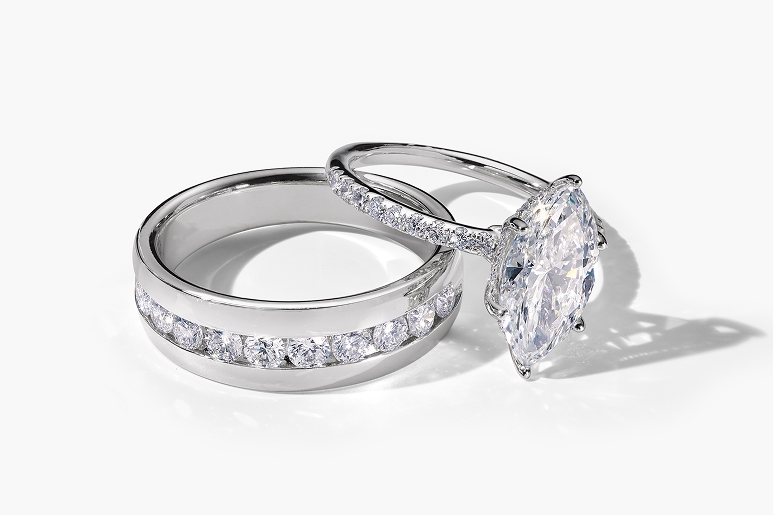
⦁ Styles and settings can impact the look of a diamond’s size, as well. A solitaire spotlights a single diamond — it’s simple, classic and timeless. A halo style gives a diamond more dazzle by framing the center stone with smaller diamonds.
Diamond color is a matter of preference, which means you can go up or down a few grades based on the other 4C’s to get the most value for your budget.
Clarity affects a diamonds appearance and price, but beautiful doesn’t always mean flawless. Every diamond is unique, and Helzberg’s jewelry experts will work with you to find one you love.
Other than its impact on the value, this C really is just a number. Beautiful diamond jewelry comes in all sizes.
Sparkle is more than flash or bling. A diamond’s sparkle comes from three things: Brilliance or brightness, which is the internal and external reflection of white light. Fire, which refers to the reflections of the colors in a rainbow, like a prism. And scintillation — the pattern of light and dark flashes when the diamond is moved.
At Helzberg, it's Choice – your decision to purchase a lab grown or natural diamond.
Yes. But because the diamonds are smaller, they’re measured together, so you’ll see “ct. tw.” or “ctw” for “carat total weight” instead of a number for each stone. Their size makes clarity and color less important – jewelers select diamonds that complement each other or the center stone.

For your brightest moments
The right diamond is the perfect bookmark for new beginnings, big celebrations and once-in-a-lifetime occasions.
Shop Helzberg’s collection of high-quality diamonds, classic settings, and timeless styles.