








Titanium is three times stronger than steel and one-third the weight of gold. It’s scratch- and crack-resistant, hypoallergenic and requires zero maintenance — nice qualities for someone with an active lifestyle. Helzberg offers a wide range of men's wedding rings in titanium, with a variety of finishes, designs and colors. One is Benchmark black titanium, a rare, solid black alloyed metal. Titanium wedding rings also tend to be a cost-effective choice for couples on a budget.
ONLINE ONLY | ENDS 12/25
for more information on this promotion, see our current promo details page. See Details
LIMITED TIME ONLY
for more information on this promotion, see our current promo details page. See Details
LIMITED TIME ONLY
for more information on this promotion, see our current promo details page. See Details
Jewelry metals guide


18K Gold
75% pure: 18 parts gold + 6 parts other metals.
18K gold has the richest color and longest-lasting luster, making it ideal for statement pieces. The higher purity means a higher investment in both cost and care.

14K Gold
58.3% pure: 14 parts gold + 10 parts other metals.
The percentage of alloys in 14K gold makes it very popular for its durability, beauty and value. The combination also gives it a paler yellow color.

10K Gold
41.7% pure: 10 parts gold +14 parts other metals.
10K gold is the most budget friendly and the toughest. It’s especially worth considering if your everyday world is a little rough and tumble.

18K Gold
75% pure: 18 parts gold + 6 parts other metals. 18K gold has the richest color and longest-lasting luster, making it ideal for statement pieces. The higher purity means a higher investment in both cost and care.
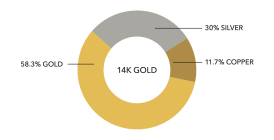
14K Gold
58.3% pure: 14 parts gold + 10 parts other metals. The percentage of alloys in 14K gold makes it very popular for its durability, beauty and value. The combination also gives it a paler yellow color.
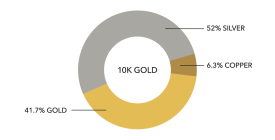
10K Gold
41.7% pure: 10 parts gold +14 parts other metals. 10K gold is the most budget friendly and the toughest. It’s especially worth considering if your everyday world is a little rough and tumble.

This isn’t your appliance-grade stainless steel: Stainless steel jewelry is composed of iron alloy and a minimum of 10.5% of chromium, and most commonly available in a light, silvery gray. Helzberg’s collection of stainless steel jewelry includes bands, watches, bracelets, chains and pendants, and earrings in an assortment of styles and settings. Stainless steel jewelry is durable, low-maintenance, and affordable.
Named for the capital city of Syria, Damascus steel refers to the forged wootz crucible steel used in the creation of blades and swords from ancient times. Modern Damascus steel jewelry is made by forging layers of contrasting metals in an artistic process that results in stunningly complex patterns.
Crafted from one of the rarest and most resilient metals, tantalum is known for its dark gray tone, substantial heft, and smooth, matte finish, though it can be polished to a glossy luster. Tantalum is more malleable than many alternative metals, making it easier to resize; but it’s strong and resists scratches and corrosion, so your Helzberg band or signet ring will last a lifetime.
Also known as cobalt chrome, this bright white metal is strong enough for use in jet engines and hypoallergenic enough for surgical tools. Cobalt is an affordable alternative to platinum or white gold and won’t shatter, tarnish or need re-plating. Helzberg’s collection features a variety of band and signet ring designs in both white and black cobalt.
Crafted from one of the rarest and most resilient metals, tantalum is known for its dark gray tone, substantial heft, and smooth, matte finish, though it can be polished to a glossy luster. Tantalum is more malleable than many alternative metals, making it easier to resize; but it’s strong and resists scratches and corrosion, so your Helzberg band or signet ring will last a lifetime.
You’d never know an Elysium ring started out as a handful of diamond crystals. Once they’re compressed under a million pounds of pressure and heated to about 2700°F, they form a black, 100% diamond ring form that can be shaped and polished into a variety of styles. Elysium makes the hardest, most scratch-resistant jewelry on the planet.
When you want to answer the question, “Where did you get your ring?” with “Outer space,” you’ll need one made of meteorite. Because it’s crafted from a chunk of an actual iron meteorite, it will be expensive. Since the high iron content makes it susceptible to rust, it will need extra care. But it’s the start of a great story.

Silver is a soft, lustrous, white transition metal valued for its electrical conductivity and decorative beauty. Sterling silver only contains 92.5% silver. The rest is usually made up of copper or some other metal.
Platinum is a lustrous, malleable, silvery-white, ductile metal. It is considered one of the transition metals, a group that includes silver, gold, titanium and copper.
Sterling silver is less durable than white gold, which usually comes with a higher price tag.
Stainless steel resists wear, dings, dents and scratches better than platinum. That said, while modern stainless steel jewelry can be very attractive, platinum jewelry still maintains a superior visual appeal and a higher monetary value.
When it comes to durability, titanium is much harder than platinum. It doesn't scratch, damage or easily lose its shape.


