




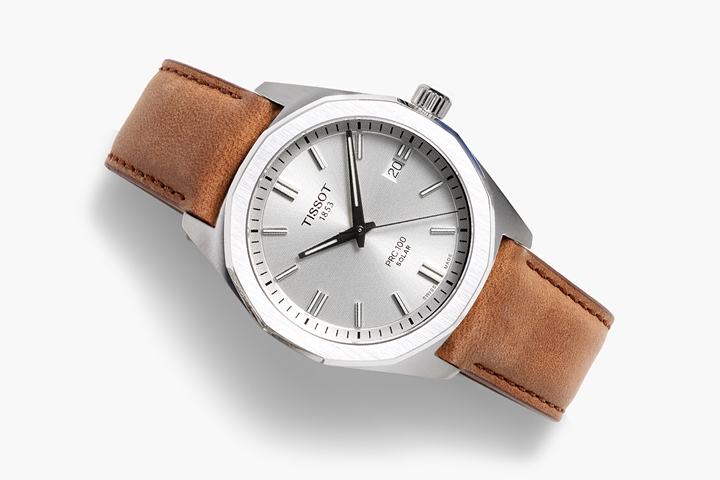
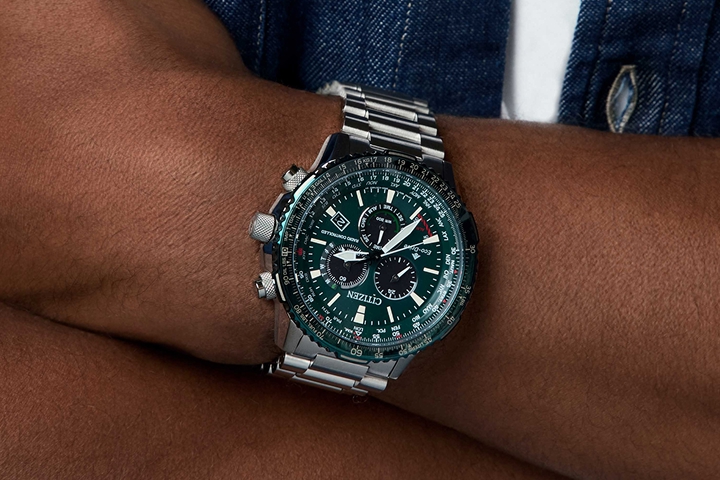
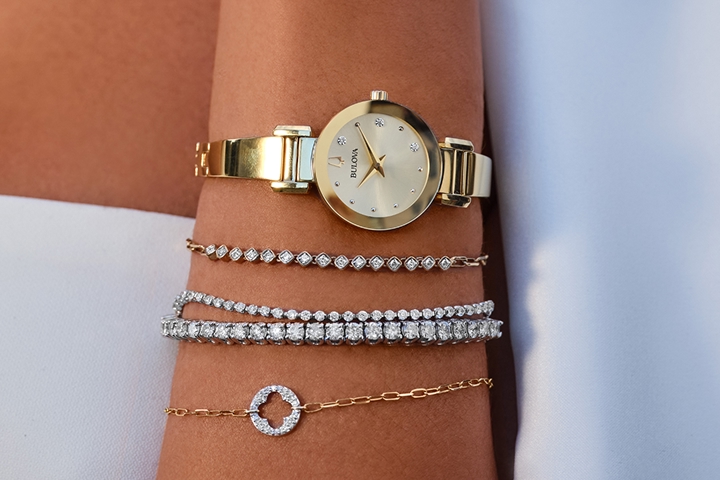
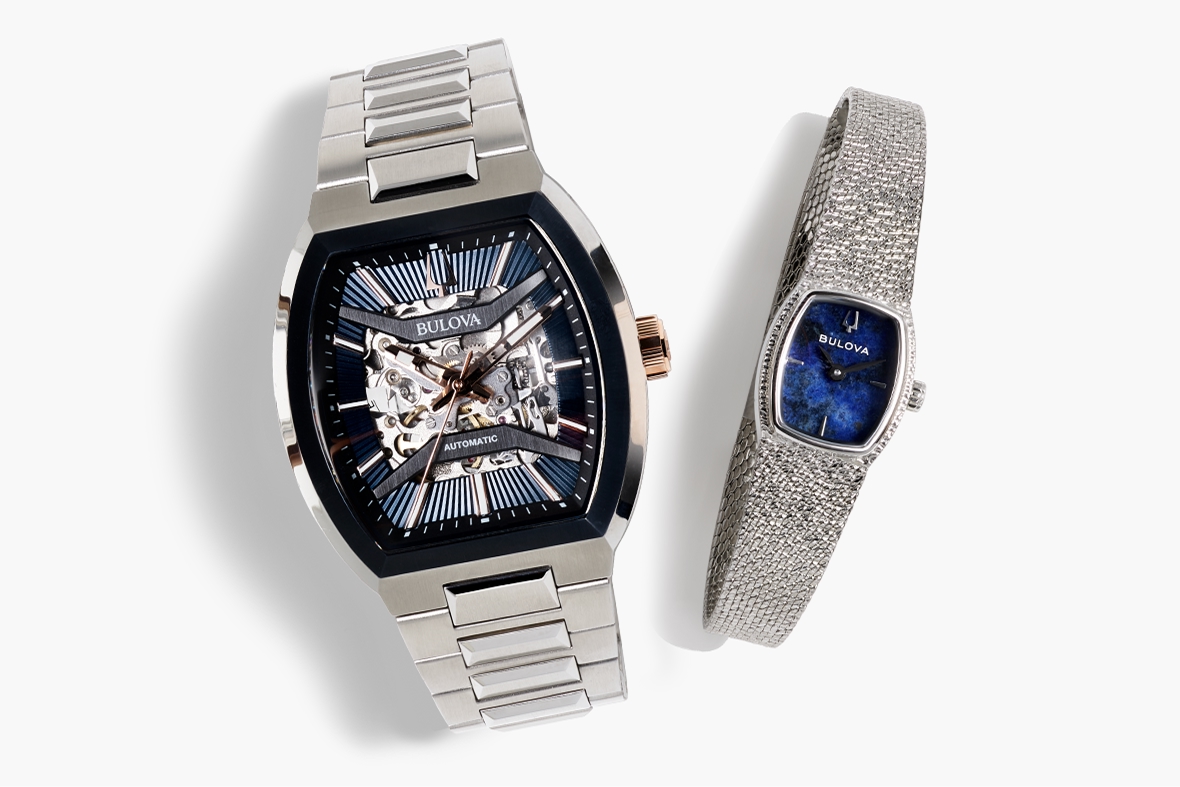
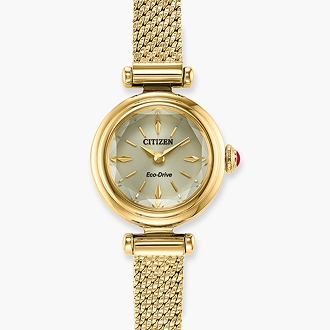
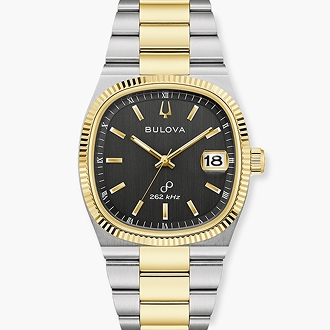
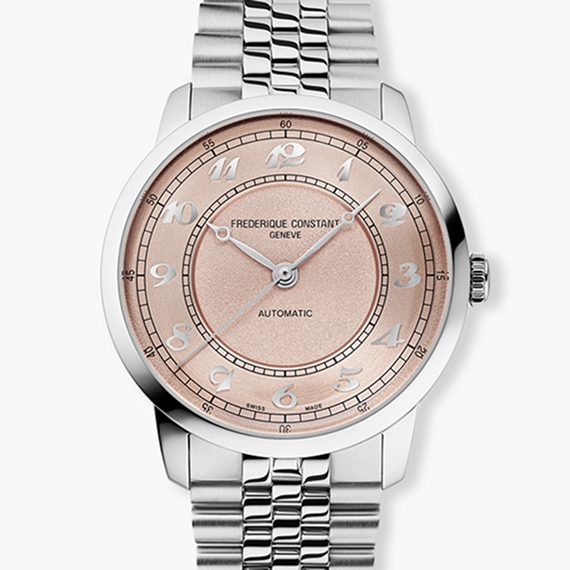
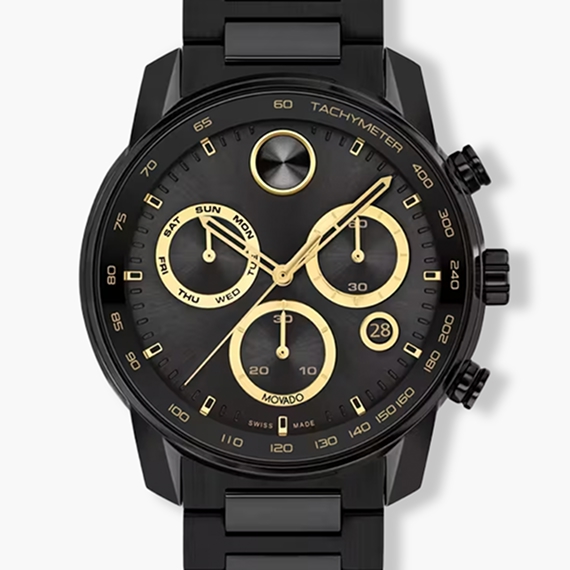
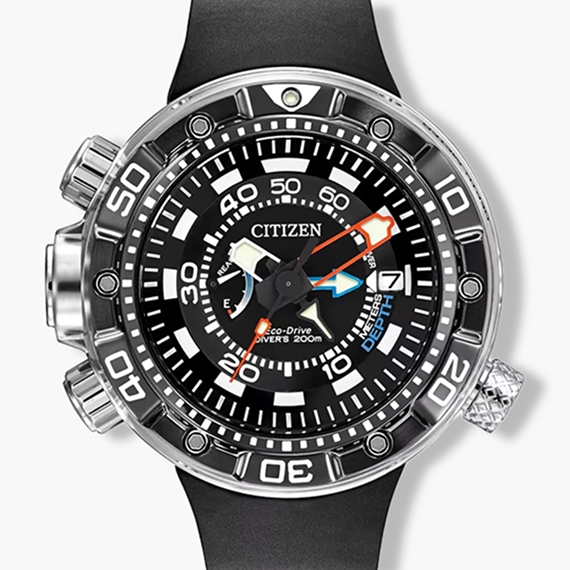
While the case size measures the width of the watch face, the lug-to-lug distance measures the length. It’s the distance between ends of the lugs that hold the straps in place at the top and bottom of the case. That distance matters because it affects the way the watch sits on your wrist. If the lug-to-lug distance is longer than your wrist is wide, the watch face will overhang your arm. (See How to measure your wrist to get a watch that fits, above.) The shape of the lugs matters, too: Depending on the kind of watch, they can be curved, angled or flat. Just one of many reasons it’s smart to stop by a Helzberg location to try on your first watch.

LIMITED TIME ONLY
for more information on this promotion, see our current promo details page. See Details
LIMITED TIME ONLY
for more information on this promotion, see our current promo details page. See Details
WATCHES 101
New watch owner’s guide
You’re ready to invest in a traditional watch. It turns out Helzberg has been helping people understand watch sizes, styles, features and fit for generations. Let’s go through some information and tips for finding a timepiece that fits your style and meets your needs.
FACE AND FIT
What watch size really means
We talk about watch size a few different ways. Case size refers to the width of the watch face in millimeters — it’s about the proportion of the watch on your wrist. Lug-to-lug distance is the measurement from the top of the face to the bottom. And you get the band size or strap length by measuring around your wrist.
Find the right case size for you
Unlike smart watches, you don’t have to charge your traditional watch on your nightstand. The movement type is the engine that powers this kind of watch. There are three main movement types:
Quartz: Powered by one of those little round replaceable batteries. Quartz watches are known for accuracy and affordability.
HPQ (High-Precision Quartz): An especially accurate quartz movement found in some Bulova watches sold by Helzberg.
Automatic: Powered by you. The motion of your wrist runs the mechanical, self-winding movement. If you don’t wear your automatic watch for a while and it stops, you can shake it gently or wind the crown (that little knob on the side) a few times (following manufacturer’s instructions, of course). Or you can get yourself a fancy ‘watch winder’ to do that for you.
Solar-powered: Any light source will power these watches, making them reliable and super low-maintenance.
Watch functions are any features on your timepiece that go beyond providing the basic displays of time (hours, minutes and seconds). Here are some common functions:
GMT (Greenwich Mean Time) watches let you display a second time zone. It’s handy for travelers and people with clients or loved ones in different parts of the world.
Chronographs are typically smaller sub-dials on the watch face that act as stopwatches.
Water resistance tells you how deep you can safely submerge the watch (intentionally or not so much).
Also known as ‘complications,’ functions exist to make your life easier, if you get the ones that work best for your needs.
Just as they do for jewelry, the metals used in a watch case affect its durability, weight and appearance.
Stainless steel: Strength and classic look
Titanium: Lightweight and durable
Gold: Timeless and luxurious
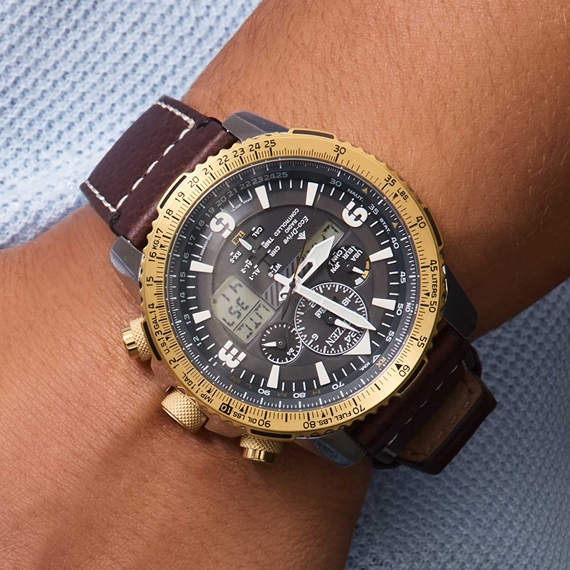
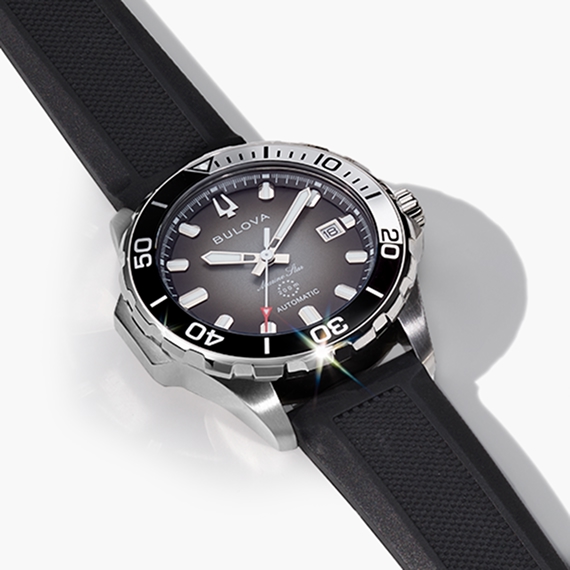
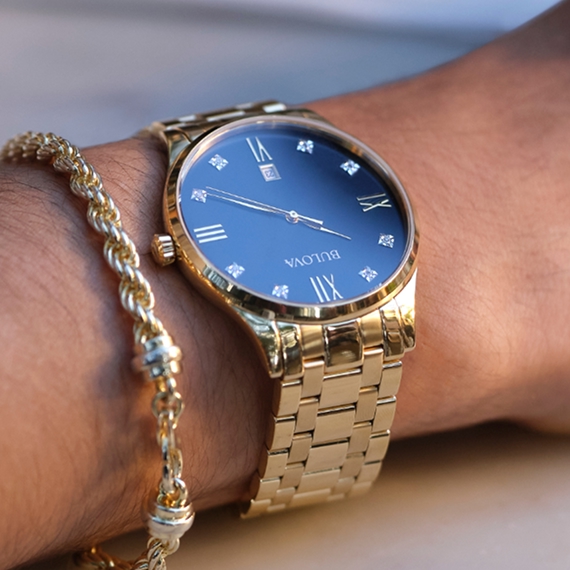
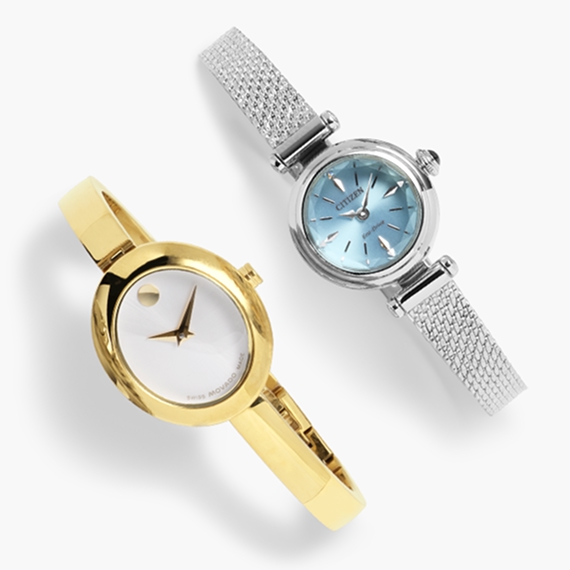
Shop watches by brand
Bulova

Citizen

Tissot

G-Shock

Movado


Avoid big shocks
Unless you're wearing a rugged sports watch, take it off before you play pickleball or grab a power tool.

Store it safely
Keep your watch safe and shiny by soring it face up on a soft surface or in a watch box or watch winder.
.svg)
Watch the water
Always keep the crown (the little knob on the side) pushed down so water can't get into the case.
Automatic watches are wrist-powered — your movement keeps them going. Wearing an automatic watch 8–10 hours a day is usually enough to keep it fully wound. Once they’re taken off, most automatics will run 36–48 hours before stopping.
When an automatic watch stops, it’s your sign to hand-wind it. If the crown is screwed down, unscrew it. Turn the crown clockwise 20–40 times. (Modern automatic watches can’t be overwound like the old-school ones.)
If you rotate between watches or don’t wear one every day, a watch winder will keep it moving for you. Get one with adjustable turns per day (TPD) to avoid unnecessary wear (see manufacturer’s instructions for both the watch and winder). If it’s going to be a while before you put it on again, let it stop instead of keeping it in the winder.
Set the time first, then the date (if applicable). Don’t change the date between 9 pm and 3 am to avoid damaging the mechanism, which is active during those hours.
Follow the manufacturer’s recommendation, which typically includes having your automatic watch cleaned and lubricated and getting the gaskets checked.
Store it in a dry place. Make sure seals are intact and crowns are screwed down so water doesn’t get in. Keep it away from magnets, including speakers, phone cases with magnets and laptops, because they can make it run fast or stop. Avoid big jolts or impacts, heavy vibrations (like using power tools or riding a motorcycle) and high-impact sports. Shock-protection isn’t always enough to protect delicate components.
.jpg)
.jpg)
.jpg)